Understand the pattern
The first task is to understand what keeps happening before, during and after the addictive behaviour.

Most people who smoke already know that smoking is harmful. The harder part is how strongly cigarettes become linked with tea, meals, work breaks, stress, driving and social routines. Families looking for a rehab centre in Mumbai can also review our main overview of the residential programme, facilities and admission process.
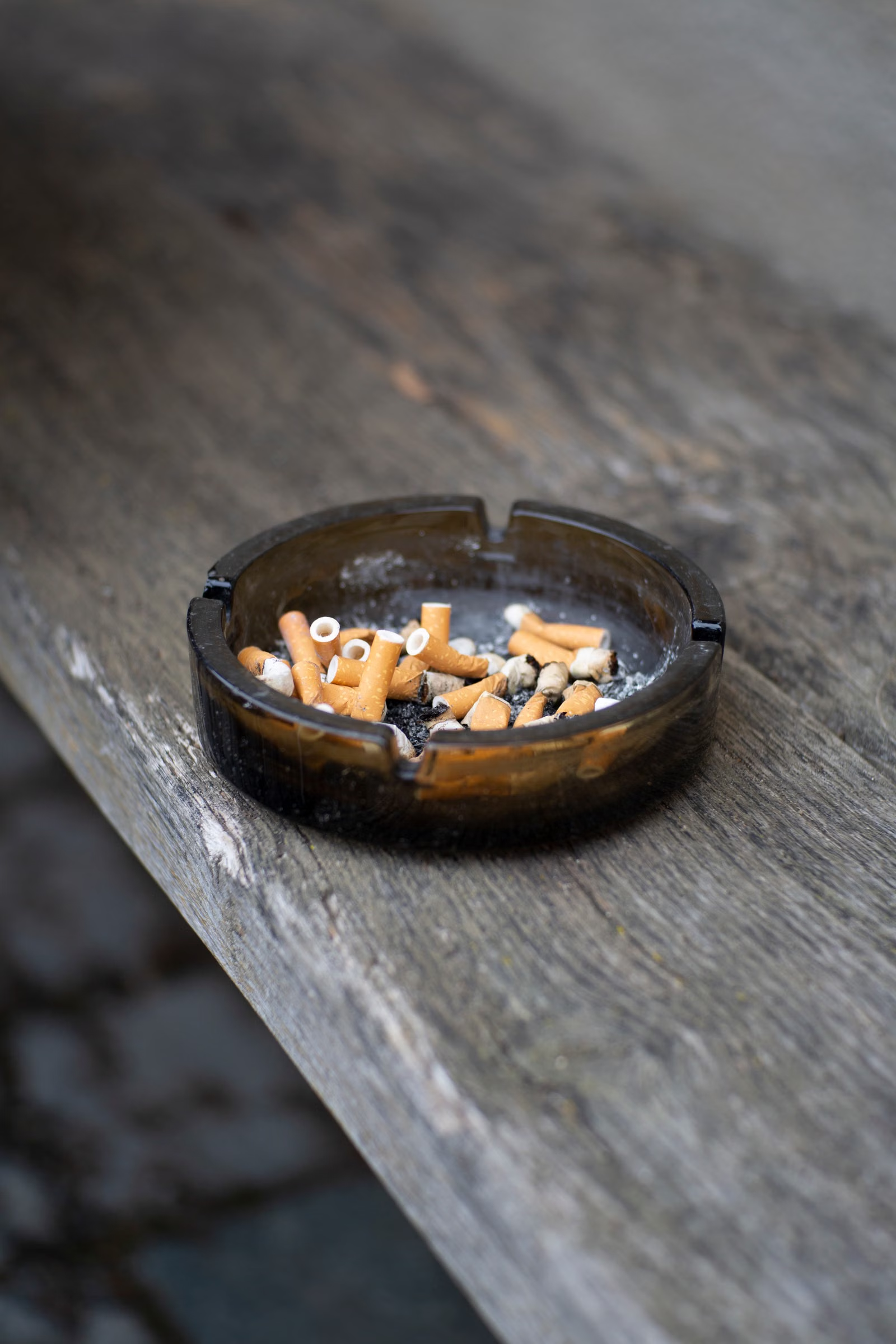
Most people who smoke already know that smoking is harmful. The harder part is how strongly cigarettes become linked with tea, meals, work breaks, stress, driving and social routines.
Families do not always know the exact diagnosis, substance or reason the behaviour keeps returning. What they usually know is what has changed: sleep, work, money, relationships, self-care, trust or the amount of time the household spends responding to the latest incident.
Residential support can help separate smoking from automatic routines and build a clear plan for cravings, triggers and situations that have led to previous relapse.
The first task is to understand what keeps happening before, during and after the addictive behaviour.
Residential care creates time away from familiar cues and gives treatment a regular place in the day.
Boundaries, money, communication and trust may all need attention before the person returns home.
Recovery planning focuses on the real situations that will return after discharge, not only on staying away from the behaviour inside the centre.
Stopping smoking is generally beneficial, but people with significant medical conditions should discuss suitable cessation support and medication options with a qualified health professional.
Residential treatment offers structure, but the outside world eventually comes back. Work pressure, money, relationships, old friends, easy access, difficult emotions and periods of low motivation can all reappear.
Before discharge, the person and family should understand the situations most likely to create difficulty. A useful plan is specific: what warning signs matter, what boundaries need to exist, who should be contacted, what continuing treatment is needed and what should happen if symptoms or addictive behaviour begin returning.
The True Humaniversity Foundation centre is located at Yeoor Hills, Thane. Residents stay in a fully air-conditioned setting, with attention to food, nutrition, routine and family reassurance.
Survey No. 7, Ashram Road, Bendipada, Yeoor Hills, Thane West, Thane, Maharashtra 400701People often search for a smoking de-addiction centre because repeated quit attempts have failed. Nicotine dependence can be strong, but that does not mean everyone needs residential rehabilitation. For most smokers, counselling plus evidence-based cessation treatment is the first-line route.
The first cigarette after waking, tea or coffee, driving, alcohol, work breaks, stress and social smoking can each have a different trigger. A useful quit plan is built around those moments rather than one generic instruction to stop.
Irritability, restlessness, craving, poor concentration and sleep changes can occur after stopping nicotine. Knowing what to expect helps people avoid interpreting normal early discomfort as proof that quitting is impossible.
Qualified clinicians can advise on evidence-based cessation medicines and nicotine-replacement options where appropriate. The choice should consider health history and individual circumstances.
If smoking is part of a broader pattern involving alcohol, drugs, severe behavioural-health problems or an existing residential admission, nicotine can be addressed inside that programme. Smoking alone usually does not justify residential rehabilitation.
Families contact True Humaniversity Foundation from Mumbai’s western suburbs, Thane, Navi Mumbai, Panvel and Kalyan-Dombivli for information about residential rehabilitation, admission and continuing recovery support.
Usually not. Most smoking cessation can be treated in outpatient care with behavioural support and evidence-based medicines where appropriate.
Nicotine dependence and strong learned routines can make quitting difficult. Treatment targets both the physical craving and the situations linked with smoking.
Look first for evidence-based tobacco-cessation support. Residential rehab is usually relevant only when smoking is part of a much wider addiction or behavioural-health problem.
No. A lapse is useful information about a trigger. The plan can be adjusted rather than abandoned.
Usually not. Many people can quit with outpatient counselling, behavioural support and evidence-based cessation treatment. Residential care should be considered only when the wider clinical situation genuinely requires that level of structure.
Yes, proven cessation treatments exist. A doctor or other qualified health professional can help choose an appropriate option based on the person’s health and circumstances.
Nicotine dependence is tied to cues and routines as well as withdrawal. Driving, tea or coffee, stress, alcohol, work breaks and social settings can continue to trigger urges after the first physical withdrawal period.
You do not need to know the right treatment term before calling. Explain the pattern, what has changed and what worries the family most.