Accurate assessment
Treatment planning starts with what is actually being used, how often and what has happened during previous attempts to stop.

Polysubstance use means more than one substance is being used, either together or across the same period. This can make intoxication, withdrawal and treatment planning more complex. Families looking for a rehab centre in Mumbai can also review our main overview of the residential programme, facilities and admission process.
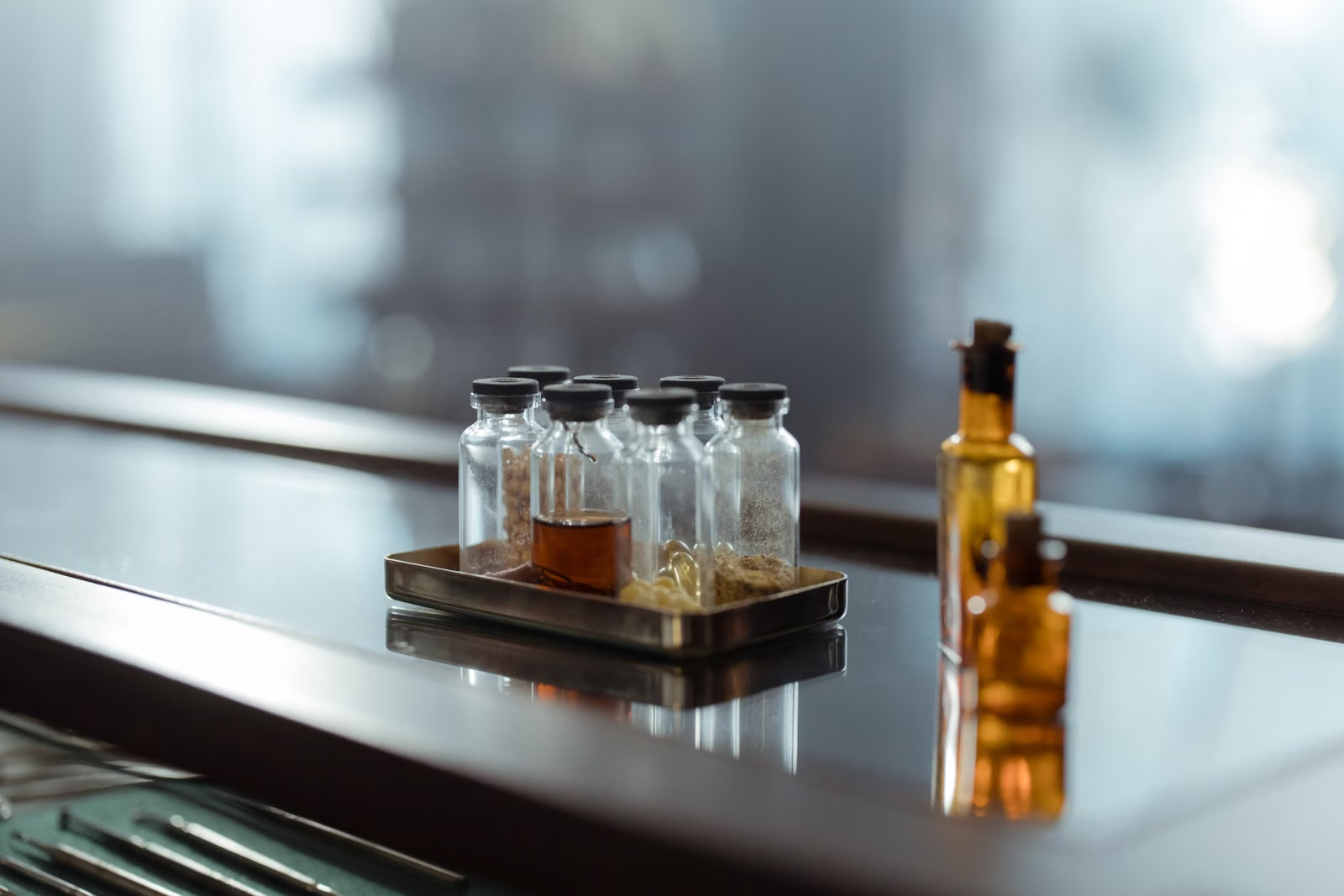
Polysubstance use means more than one substance is being used, either together or across the same period. This can make intoxication, withdrawal and treatment planning more complex.
Families do not always know the exact diagnosis, substance or reason the behaviour keeps returning. What they usually know is what has changed: sleep, work, money, relationships, self-care, trust or the amount of time the household spends responding to the latest incident.
Residential treatment can create distance from access and familiar cues while the programme works on combined effects, withdrawal interactions, overdose risk and coordinated recovery planning.
Treatment planning starts with what is actually being used, how often and what has happened during previous attempts to stop.
Counselling looks at people, places, emotions, access and routines that repeatedly increase the risk of returning to use.
Money, access, trust and communication often need a clearer plan before discharge.
The resident prepares for situations that will return after treatment rather than assuming motivation will always stay strong.
The exact substance, dose, frequency, combinations, recent use, medicines and previous withdrawal matter. Some drug withdrawals or acute reactions require medical assessment before residential rehabilitation.
Residential treatment offers structure, but the outside world eventually comes back. Work pressure, money, relationships, old friends, easy access, difficult emotions and periods of low motivation can all reappear.
Before discharge, the person and family should understand the situations most likely to create difficulty. A useful plan is specific: what warning signs matter, what boundaries need to exist, who should be contacted, what continuing treatment is needed and what should happen if symptoms or addictive behaviour begin returning.
The True Humaniversity Foundation centre is located at Yeoor Hills, Thane. Residents stay in a fully air-conditioned setting, with attention to food, nutrition, routine and family reassurance.
Survey No. 7, Ashram Road, Bendipada, Yeoor Hills, Thane West, Thane, Maharashtra 400701A person may drink alcohol, take sleeping tablets, use opioids on some days and stimulants on others. Families sometimes focus on the drug they fear most, while the combination creates the greater medical risk.
Alcohol, prescription tablets, cough syrups, pain medicines and street drugs all belong in the history. Omitting a “legal” medicine can make withdrawal planning unsafe.
Alcohol, opioids and sedatives can compound impairment and breathing risk. Any history of overdose, reduced consciousness or emergency treatment should be disclosed.
Different substances peak and clear at different times. Medical assessment should identify which withdrawals may need supervised management before routine rehabilitation proceeds.
One substance may lower inhibition for another. For example, alcohol can become the route back to cocaine, or anxiety after stimulant use can lead to sedatives. Treatment has to understand the chain, not just the final drug.
Families contact True Humaniversity Foundation from Mumbai’s western suburbs, Thane, Navi Mumbai, Panvel and Kalyan-Dombivli for information about residential rehabilitation, admission and continuing recovery support.
Using more than one psychoactive substance in the same period—whether together or at different times—can create a polysubstance pattern relevant to treatment.
Their sedating effects can combine and increase impairment and breathing risk.
The most dangerous withdrawal may need priority, but the treatment plan should account for all substances because one may trigger or mask another.
Bring all available medicine strips, prescriptions, known drug names and a simple timeline of what is used on a typical day or week.
Using more than one psychoactive substance in the same overall pattern—including alcohol, prescription medicines and street drugs—can be clinically important even if they are not always taken at the same time.
The order and combination of substances can change overdose, withdrawal and psychiatric risk. “Mostly alcohol” can hide sedatives or opioids that materially alter the plan.
Immediate risks may need prioritisation, but the recovery plan should address every substance that plays a meaningful role in the cycle.
You do not need to know the right treatment term before calling. Explain the pattern, what has changed and what worries the family most.