Accurate assessment
Treatment planning starts with what is actually being used, how often and what has happened during previous attempts to stop.
Prescription medicines can cause serious problems when taken in higher doses, for longer than intended, without supervision or for reasons other than those for which they were prescribed. Families looking for a vyasan mukti kendra in Mumbai can also review our main overview of the residential programme, facilities and admission process.
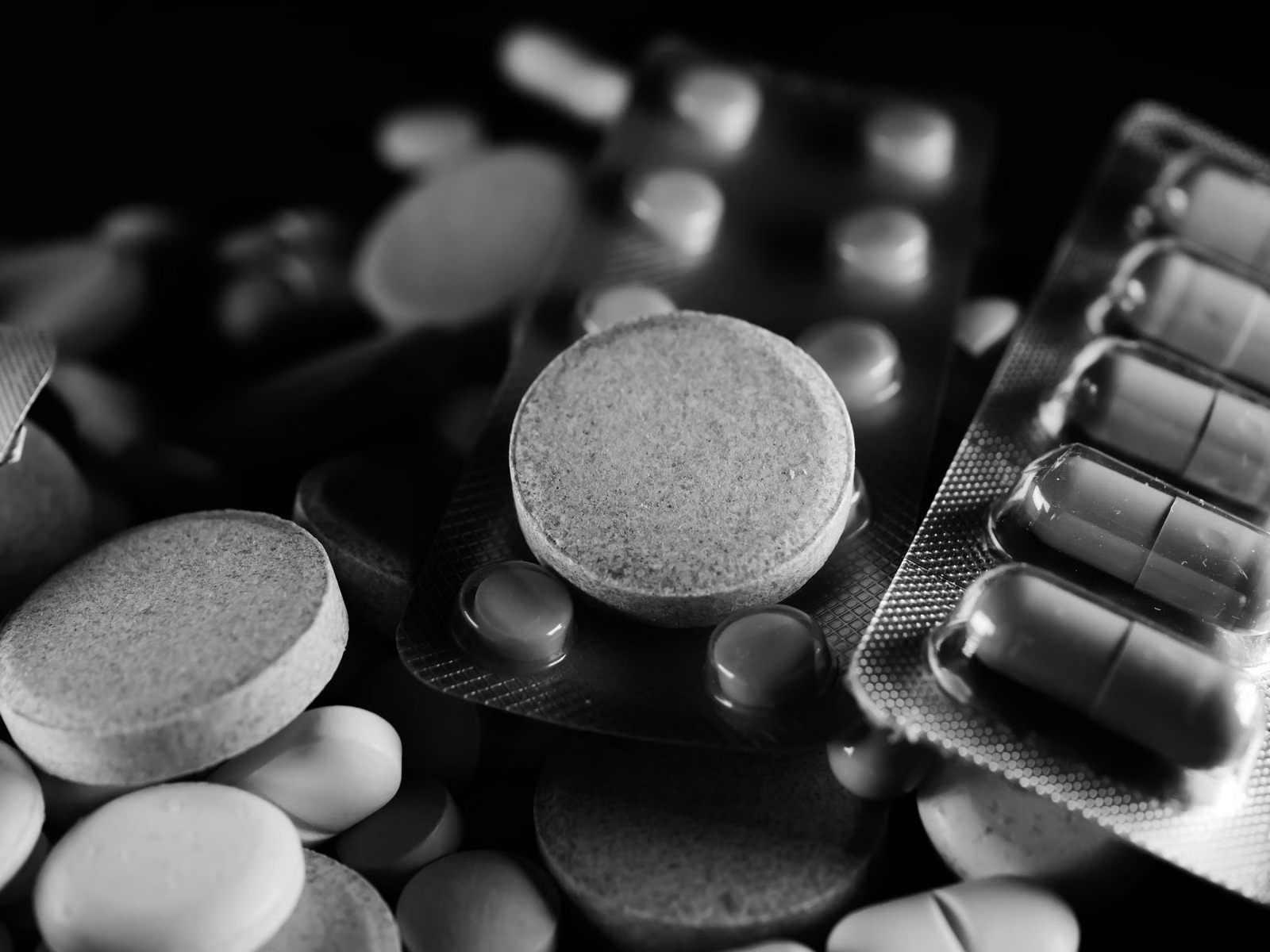
Prescription medicines can cause serious problems when taken in higher doses, for longer than intended, without supervision or for reasons other than those for which they were prescribed.
Families do not always know the exact diagnosis, substance or reason the behaviour keeps returning. What they usually know is what has changed: sleep, work, money, relationships, self-care, trust or the amount of time the household spends responding to the latest incident.
Residential treatment can create distance from access and familiar cues while the programme works on safe medication review, dependence, withdrawal risk and behaviour around access.
Treatment planning starts with what is actually being used, how often and what has happened during previous attempts to stop.
Counselling looks at people, places, emotions, access and routines that repeatedly increase the risk of returning to use.
Money, access, trust and communication often need a clearer plan before discharge.
The resident prepares for situations that will return after treatment rather than assuming motivation will always stay strong.
The exact substance, dose, frequency, combinations, recent use, medicines and previous withdrawal matter. Some drug withdrawals or acute reactions require medical assessment before residential rehabilitation.
Residential treatment offers structure, but the outside world eventually comes back. Work pressure, money, relationships, old friends, easy access, difficult emotions and periods of low motivation can all reappear.
Before discharge, the person and family should understand the situations most likely to create difficulty. A useful plan is specific: what warning signs matter, what boundaries need to exist, who should be contacted, what continuing treatment is needed and what should happen if symptoms or addictive behaviour begin returning.
The True Humaniversity Foundation centre is located at Yeoor Hills, Thane. Residents stay in a fully air-conditioned setting, with attention to food, nutrition, routine and family reassurance.
Survey No. 7, Ashram Road, Bendipada, Yeoor Hills, Thane West, Thane, Maharashtra 400701Families often hesitate to call something a drug problem when the tablets came from a pharmacy or were first prescribed by a doctor. The key question is not whether the medicine is legal; it is whether use has moved beyond a safe plan and is now causing dependence, loss of control or harm.
Pain medicines, sedatives, sleeping tablets and stimulants have different risks. The exact product, dose, duration, prescriber history and other substances used alongside it should be reviewed.
Repeatedly seeking new prescriptions, reporting lost tablets, using several pharmacies or taking medication intended for another person may signal that control has shifted.
Pain, anxiety, panic, ADHD or insomnia may have been genuine. Treatment must not leave the person with the message that the only choice is uncontrolled use or untreated symptoms.
Supervised dispensing may be useful for a period, but the longer plan needs medical review, coping strategies, relapse prevention and a clearer route for managing the underlying condition.
Families contact True Humaniversity Foundation from Mumbai’s western suburbs, Thane, Navi Mumbai, Panvel and Kalyan-Dombivli for information about residential rehabilitation, admission and continuing recovery support.
Yes. Physical dependence can develop even when a medicine was originally prescribed appropriately. That is different from saying every dependent patient has an addiction, so the full pattern should be assessed.
Not without medical advice. Some medicines can be unsafe to stop abruptly, and the person may still need treatment for the original condition.
Have the medicine names, strengths, prescriptions and approximate daily amounts if possible, plus any information about alcohol or other drugs.
Yes for some people. Residential care is one option when safety, repeated relapse, the home environment or broader addiction problems make more structure useful.
No. Physical dependence, appropriate long-term treatment and addiction are not the same thing. The exact medicine, dose, control over use and consequences need to be assessed.
Not without medical advice. Some medicines can cause dangerous withdrawal or a return of the condition they were treating.
Bring the prescription, strips, bottles or photographs of the medication label and explain dose changes, early refills, multiple prescribers or mixing with alcohol or other drugs.
You do not need to know the right treatment term before calling. Explain the pattern, what has changed and what worries the family most.